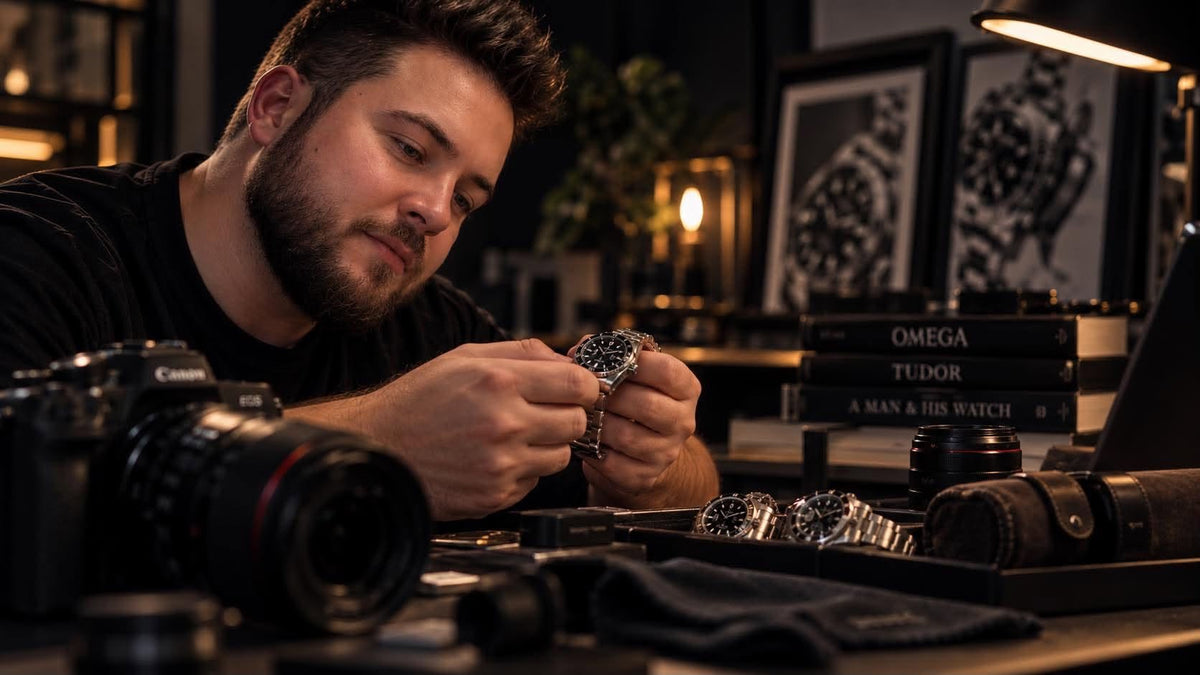

Watch complications can be fascinating, but the best feature is one you will actually use. A chronograph, a GMT, and a diver’s watch create three very different experiences on the wrist.
Chronographs for those who like interaction
Additional pushers and sub-dials allow you to measure short intervals of time. A chronograph is useful in sports, the kitchen, at work, and while traveling, but many people also choose it for its technical look. Keep in mind that the movement is more complex, and the case is usually larger and thicker.
GMT for travel and work
An additional hour hand allows you to track a second time zone. It is a practical solution for people who travel, work with international partners, or have family in another country. It is worth checking whether a given model allows you to independently adjust the local time hand or just the GMT hand.
The diver as an everyday watch
A rotating bezel, strong luminescence, and a robust construction were designed for diving, but today the diver is one of the most versatile sports watches. It handles daily use well and easily changes its character when switched to a rubber strap, a bracelet, or a fabric NATO strap.
Proportions are just as important as function
When choosing, look at the diameter, thickness, and lug-to-lug distance. A complex chronograph might look great in a photo, but sit poorly under a cuff. Conversely, a massive diver can be surprisingly comfortable if it has short lugs and a well-contoured bracelet.
You don’t have to choose a complication for life. The FCW Journey lets you start with the function that suits you today, and later swap your watch to explore another category.