
TAG Heuer
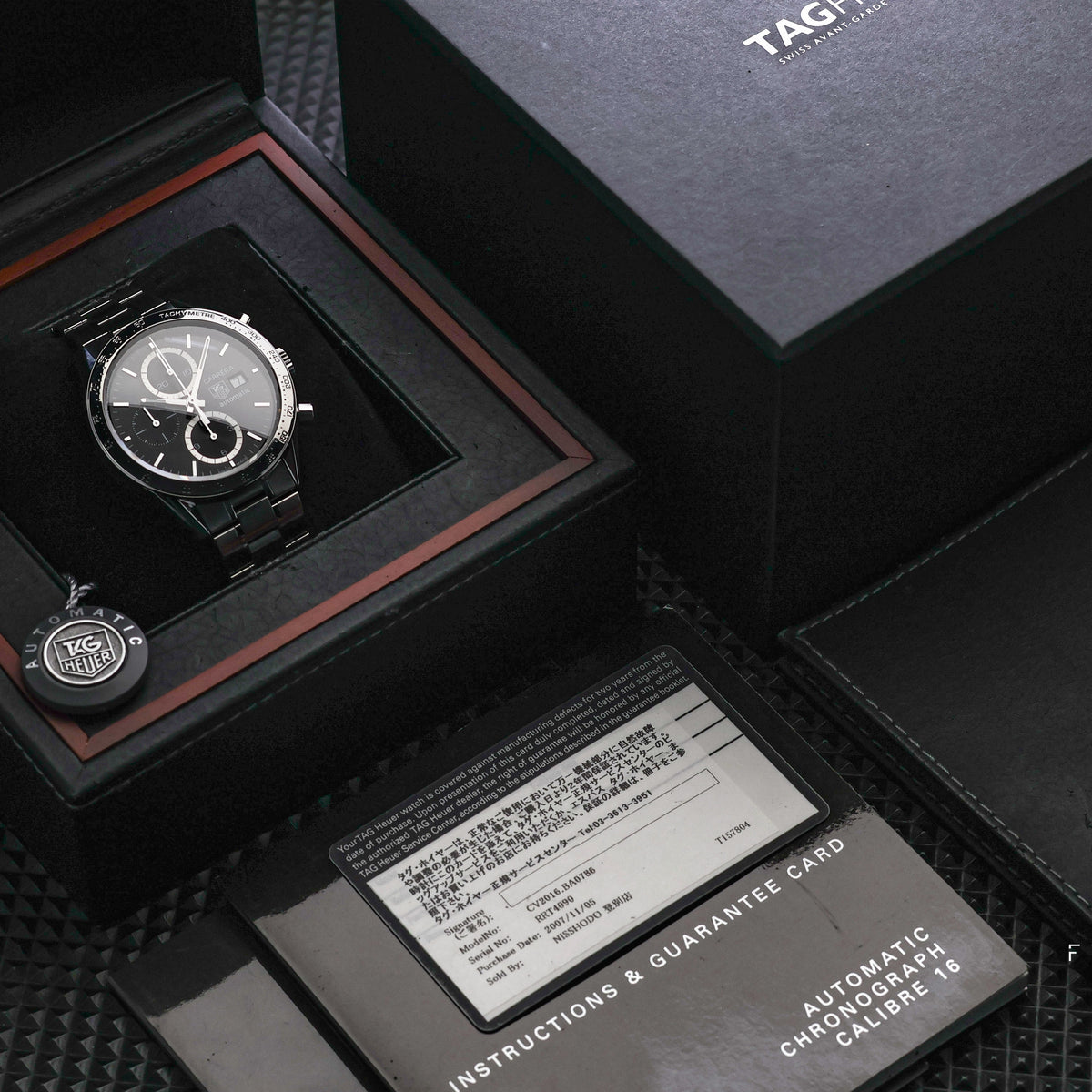
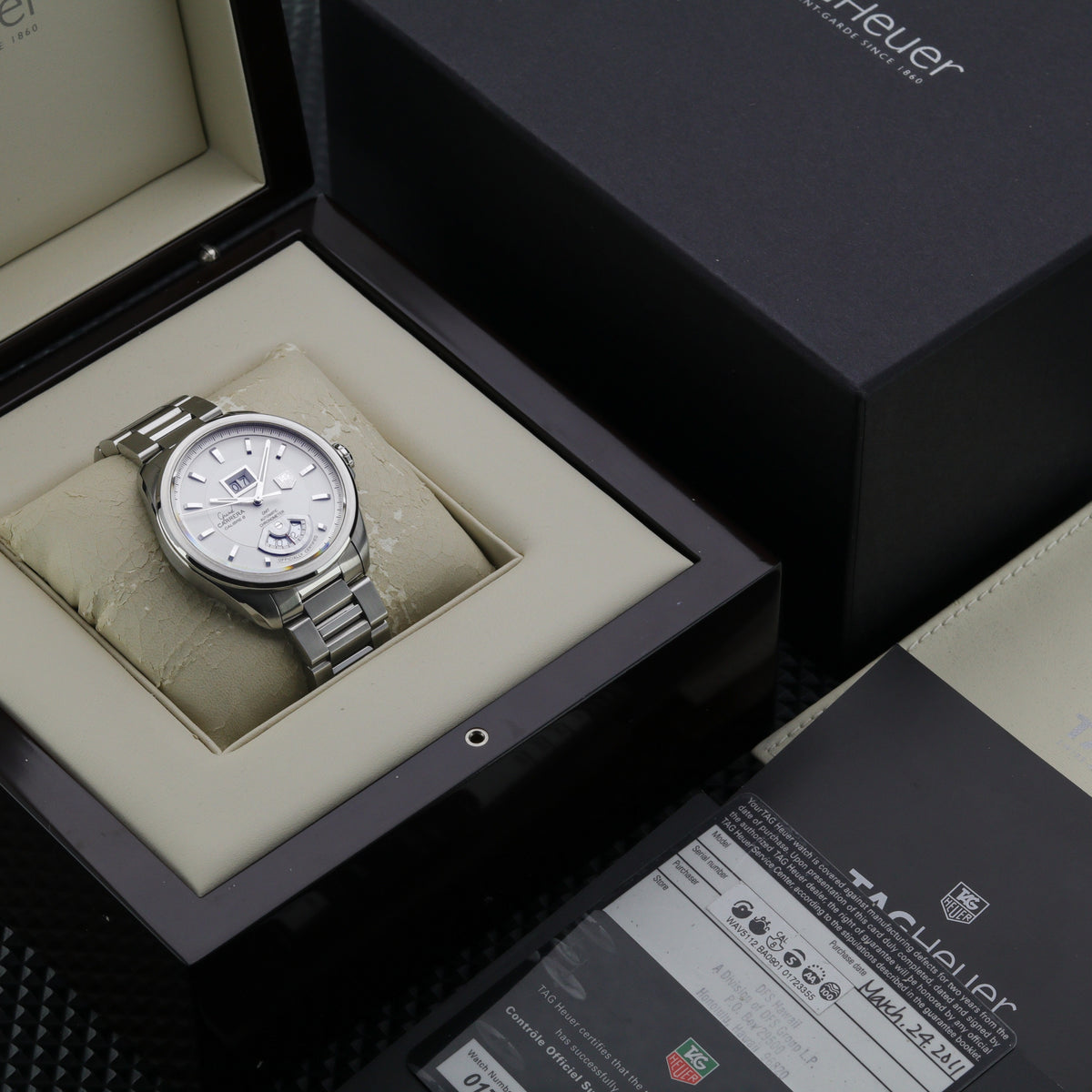
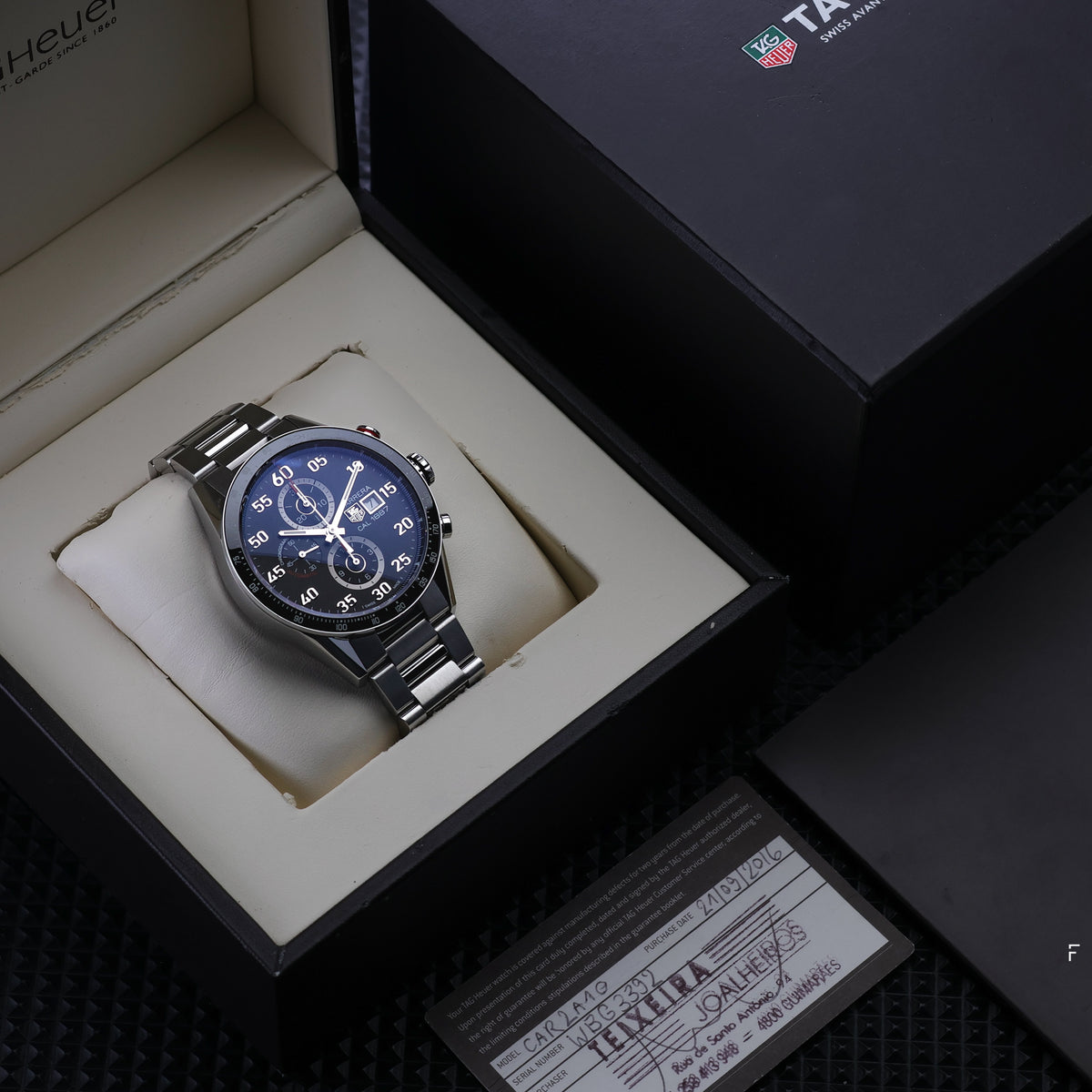
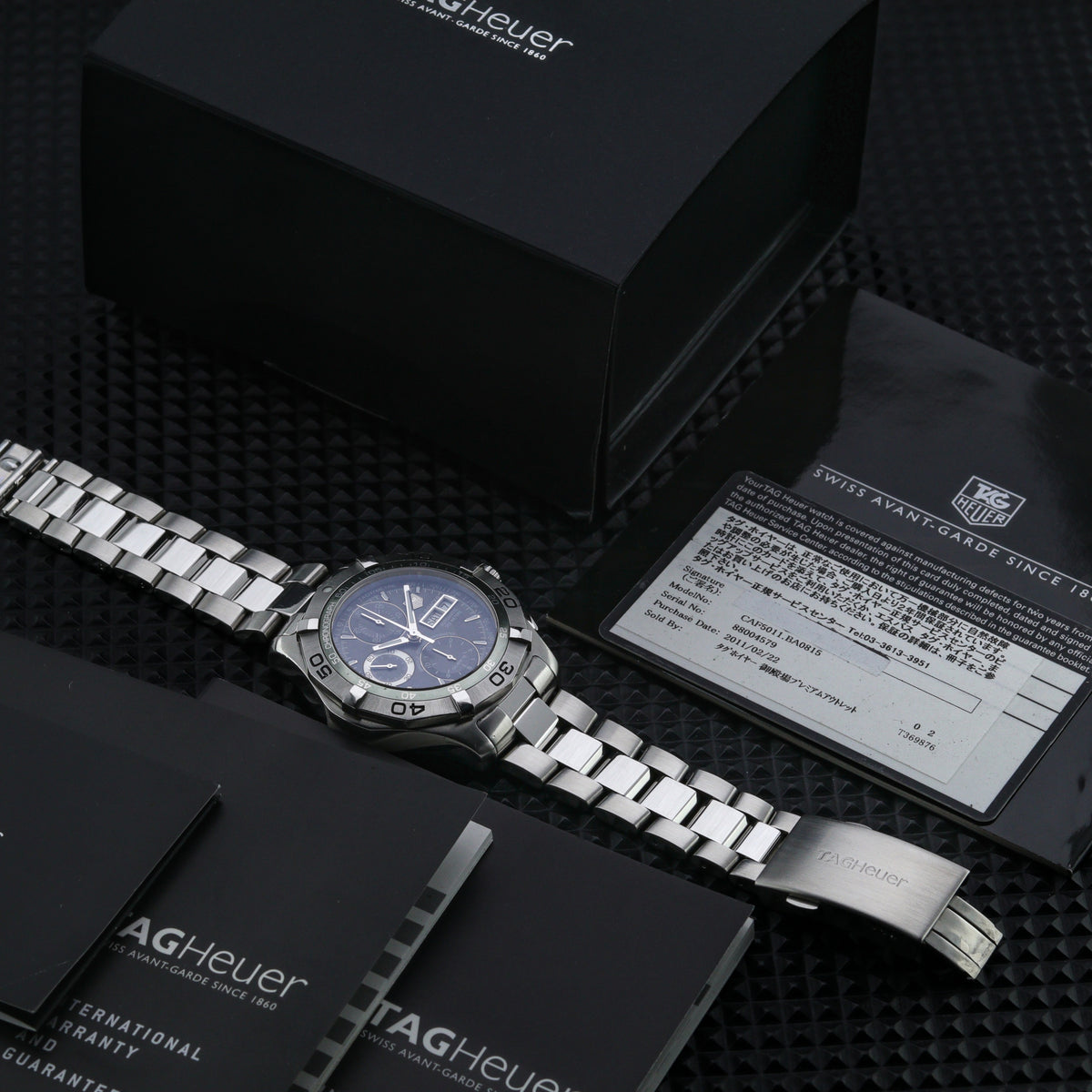
TAG Heuer is a brand closely associated with chronographs, motorsports, and designs that clearly capture the spirit of their era. We select pieces that are significant in terms of design, utility, and history.





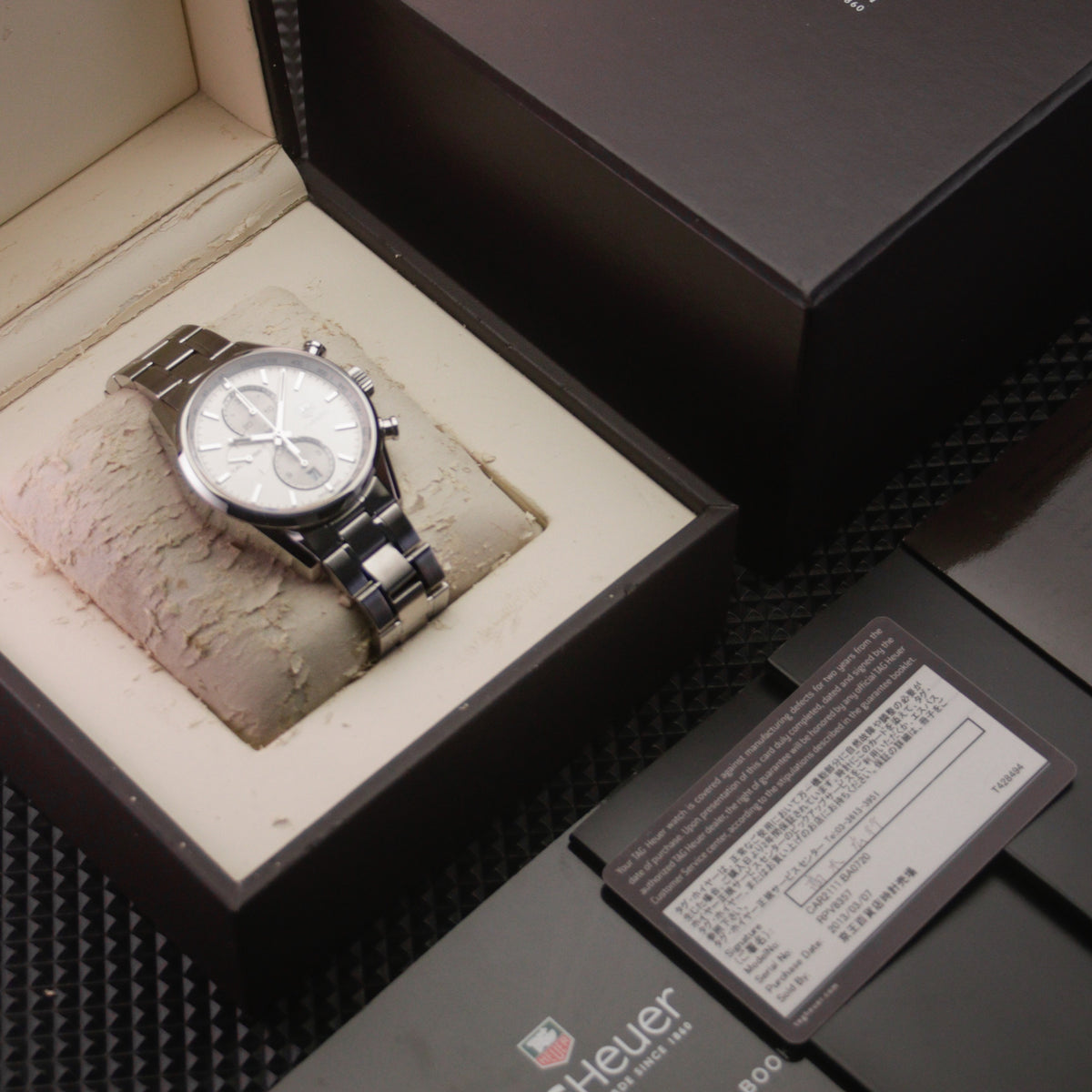
TAG Heuer
History by year

Brand origins
Edouard Heuer founds a watchmaking workshop in Saint-Imier.

Crown winding
In 1869, Edouard Heuer patented a crown-operated winding system for pocket watches. This solution allowed the mechanism to be wound without a separate key and made daily use of the watch easier. The original illustration refers to the precision machining of parts in a watchmaker's workshop.

Oscillating pinion
In 1887, Edouard Heuer patented the oscillating pinion. This solution simplified the coupling of the chronograph mechanism with the watch movement and became an important development for this complication. The original illustration symbolically refers to the protection of the invention by a patent.

Mikrograph
In 1916, Heuer introduced the Mikrograph — a mechanical stopwatch measuring time with a resolution of 1/100th of a second. It was a breakthrough for the precise measurement of short intervals, especially in sports. The original illustration refers to early 20th-century athletics.

Autavia
In 1933, Heuer introduced the Autavia, a timepiece designed for mounting on the dashboards of cars and aircraft. The name combines the words "automobile" and "aviation"; the Autavia wrist chronograph would not appear until 1962. The original illustration references interwar aviation.

Carrera
The Carrera debuts as a legible chronograph inspired by the Carrera Panamericana race. Pictured: Heuer Carrera ref. 2447S from circa 1964.

Monaco
In 1969, the Heuer Monaco made its debut — an automatic chronograph in a distinctive square, water-resistant case. Its bold design became one of the brand's symbols. Pictured: a contemporary TAG Heuer Monaco from 2020, which continues the collection's design, not a 1969 model. Photo: EMore98 / Wikimedia Commons, "TAG Heuer Monaco, 2020", CC BY-SA 4.0 (https://creativecommons.org/licenses/by-sa/4.0/), square crop.

Acquisition by TAG
In 1985, the TAG (Techniques d’Avant Garde) group acquires Heuer. A new stage of the company's development begins, and it subsequently adopts the name TAG Heuer. The original illustration symbolizes a turning of the page in the brand's history. The name TAG Heuer is created following the merger of Heuer with Techniques d'Avant-Garde.

Calibre 1887
In 2010, TAG Heuer introduced the Calibre 1887, an automatic chronograph movement with a column wheel. Developed and manufactured by the brand based on a licensed Seiko design, it expanded their range of mechanical chronographs. The original illustration references the precision involved in assembling small components.

TAG Heuer Connected
In 2015, TAG Heuer presents the first Connected, developed in collaboration with Intel and Google. The watch’s design meets the digital features of the Android Wear system, opening a new chapter in the brand's offerings. The original illustration refers to electronics; it does not depict the components of a specific model.